Photo by Petr Kozánek, 1968
TICHÝ 100
Prague - Zürich
1.12.2025–31.12.2026
Celebrating the 100th Anniversary of Czech photographer Miroslav Tichý in November 2026
Throughout 2026 tichyocean will invite you to exhibitions, events and projects
Celebrate with us!
Tichý 100: Miroslav Tichý
Zürich
22.5.–4.9.2026
This exhibition brings together a curated selection of some of Miroslav Tichý’s most striking works, spanning different periods of his life and artistic practice—from rare early paintings and drawings to his later, now iconic ...
This exhibition brings together a curated selection of some of Miroslav Tichý’s most striking works, spanning different periods of his life and artistic practice—from rare early paintings and drawings to his later, now iconic photographic work.
After studying at the Academy of Fine Arts in Prague from 1945 to 1948, where he was regarded as a particularly gifted draughtsman and devoted himself intensively to studying the female nude, the Communist takeover of 1948 brought about his definitive break with the Academy. As the nude was rejected as bourgeois and decadent and Socialist Realism was promoted in its place, Tichý withdrew to his hometown of Kyjov. There, outside the established art world and removed from official artistic structures, he began to develop an independent artistic practice.
The female figure remained the central motif of his work throughout his life. In drawings, paintings and, later, photographs, he explored its appearance and movement. He found his subjects in everyday life—on the street, in parks or at swimming pools. Although the image of women is at the heart of his work, his practice is shaped less by erotic interest than by an artistic investigation of form, movement and perception—an approach that recalls Henri Matisse, an early influence on Miroslav Tichý.
From the late 1960s onwards, Tichý began to photograph. At first, he used conventional cameras, but later constructed his own idiosyncratic devices from simple materials such as wood, spectacle lenses and hand-ground lenses. He frequently worked further on the resulting photographs through drawing, collage or improvised framing, deliberately pushing beyond the conventions of photographic practice.
His body of work spans a range of media and includes thousands of drawings, numerous paintings and monotypes, as well as an extensive photographic oeuvre. It is characterised by a deliberately unconventional visual language and unfolds into a distinctive, poetic pictorial world that resists established aesthetic norms.
The exhibition brings this multifaceted practice into view. It presents Tichý’s simultaneous engagement with different media alongside his self-built cameras and enlargers, offering direct insight into the conditions under which his work was created.
Finissage: Tichý Story
tichyocean, Zürich
4.9.2026
For the finissage of Tichý 100, we are pleased to invite you to Tichý Story.
Drawing on his personal memories and encounters with Miroslav Tichý, Roman ...
For the finissage of Tichý 100, we are pleased to invite you to Tichý Story.
Drawing on his personal memories and encounters with Miroslav Tichý, Roman Buxbaum will tell the fascinating story of the artist’s life and work.
Finissage
September 4, 2026
Apéro from 6 pm
The Tichý Story with Roman Buxbaum begins at 6.30 pm
tichyocean
Lessingstrasse 9
8002 Zürich
Pavla Sceranková, Vladimír Houdek
Alone in Space
tichyocean
23.9.–20.11.2026
opening 23.9. 2026, 6pm
The duo exhibition of sculptor Pavla Sceranková and painter Vladimír Houdek brings together works that explore the tension between structure and fragility, the personal and the universal, the individual and the relational.
Outer ...
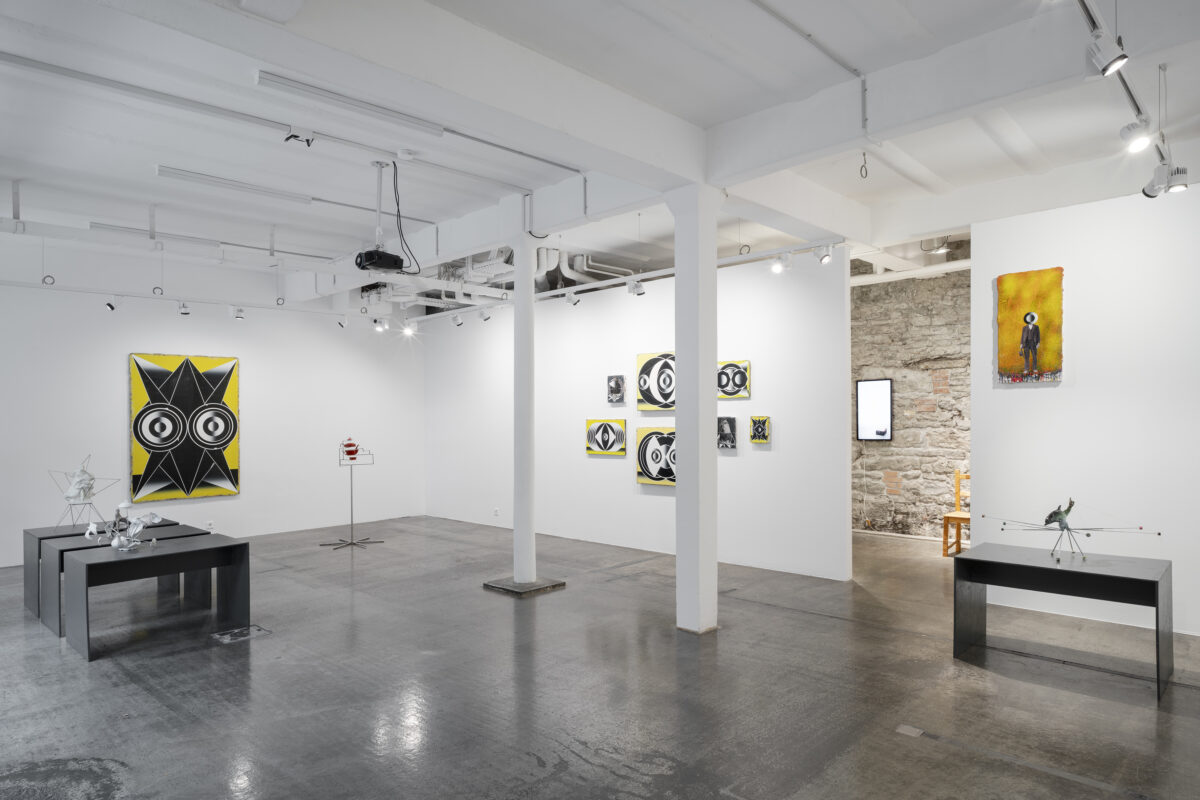
The duo exhibition of sculptor Pavla Sceranková and painter Vladimír Houdek brings together works that explore the tension between structure and fragility, the personal and the universal, the individual and the relational.
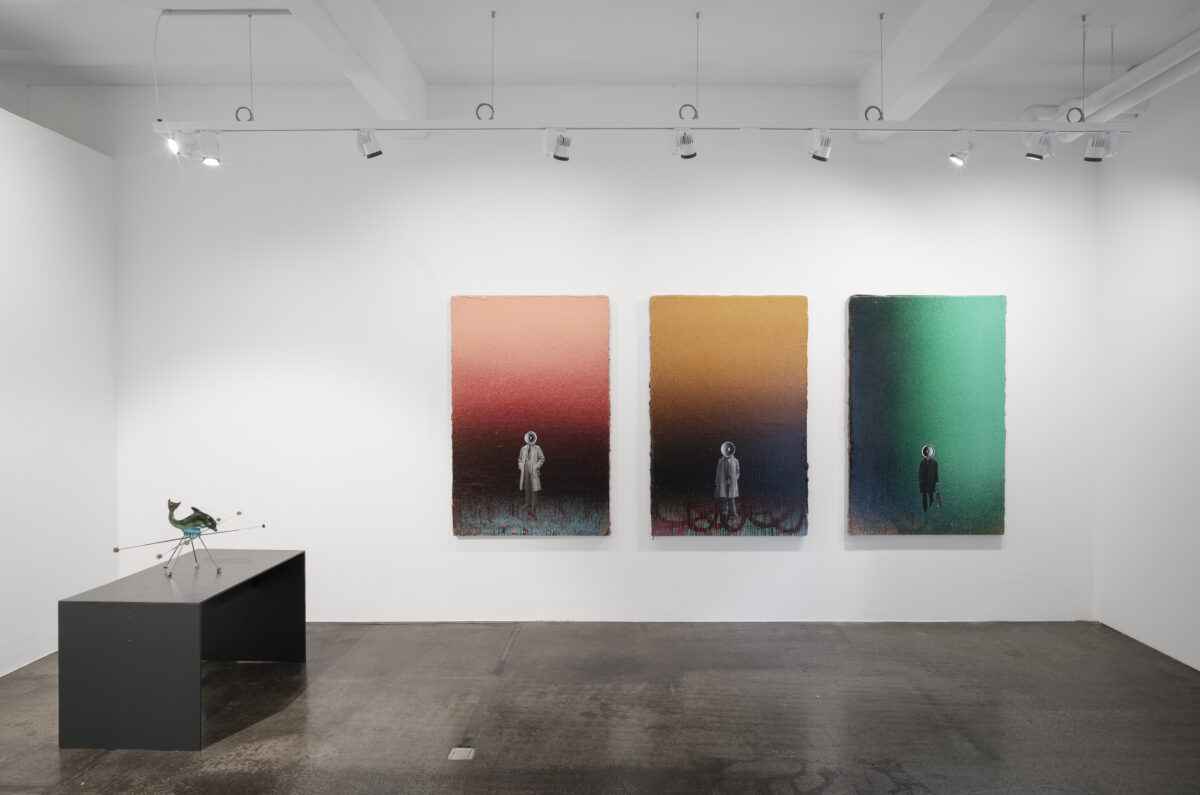
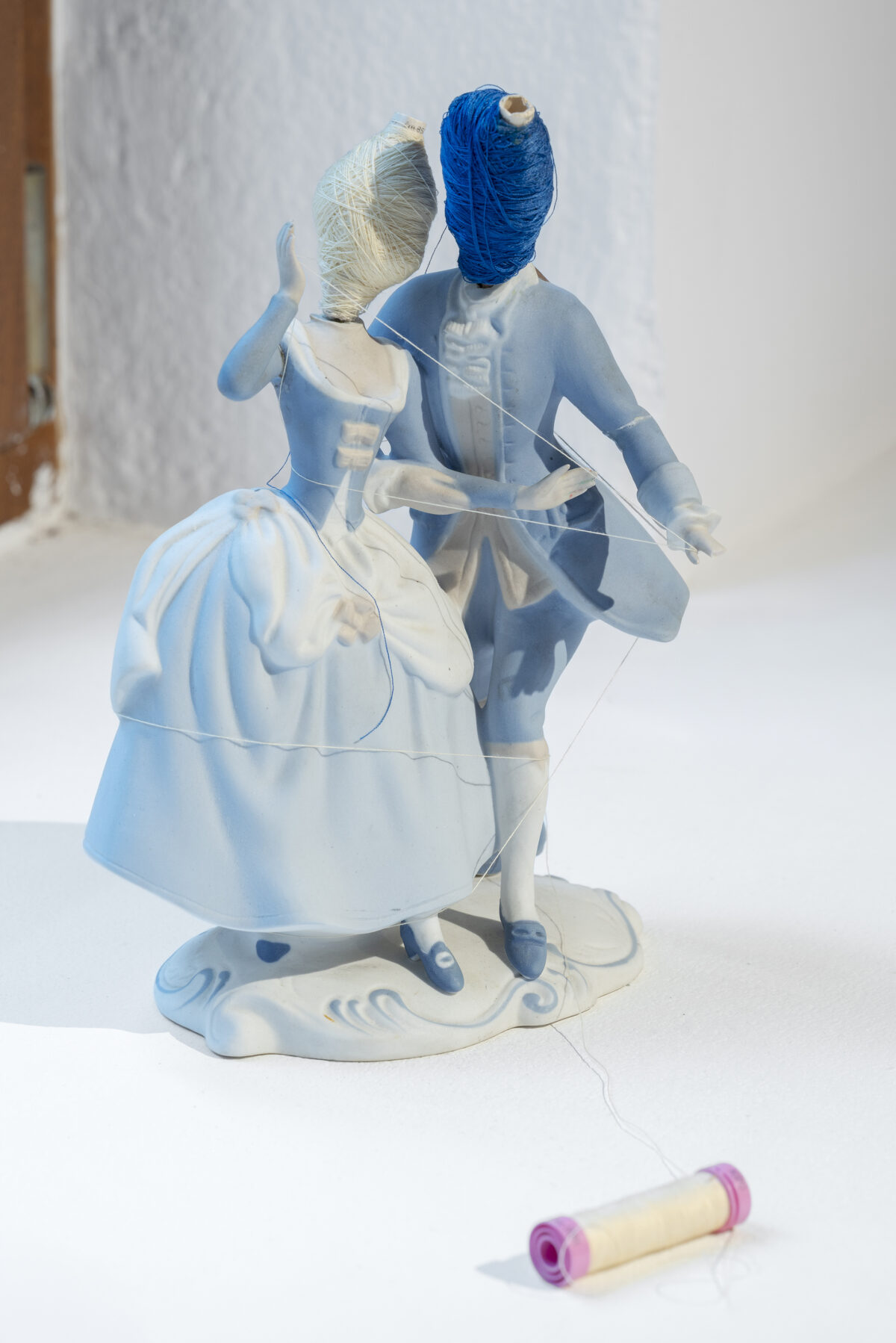
Outer space and the human means of exploring and understanding it have long been central to Sceranková’s artistic practice. Rather than approaching the cosmos through distant or abstract concepts, however, she often grasps it through the mundane: everyday objects, broken apart and reassembled, become a pathway towards larger principles governing bodies, matter and their relations. In Small Galaxy Collision, a broken teapot becomes part of a kinetic system in which its fragments repeatedly come together in a fleeting celestial phenomenon, only to separate again and continue circulating along their individual orbits. Elsewhere, figures of dancers seem to perform at the edge of time and space, levitating or otherwise challenging the rules of gravity.
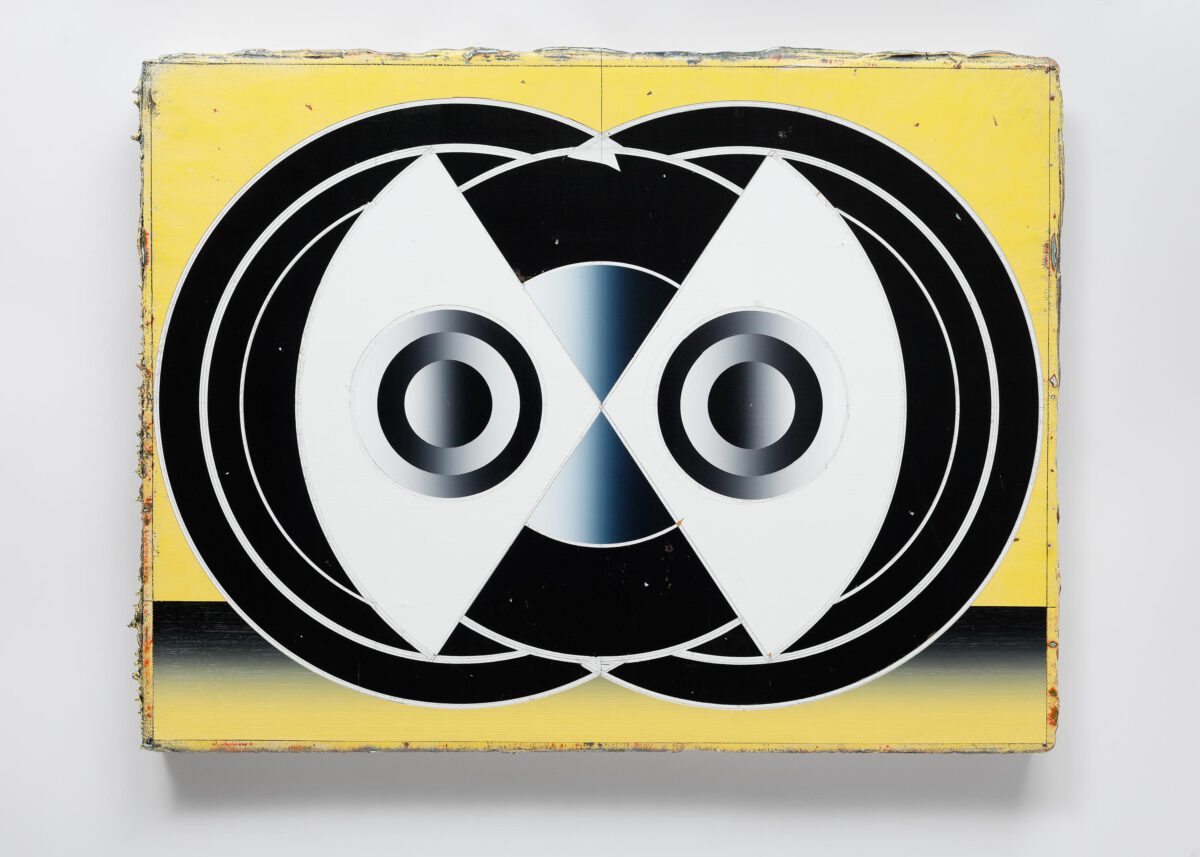
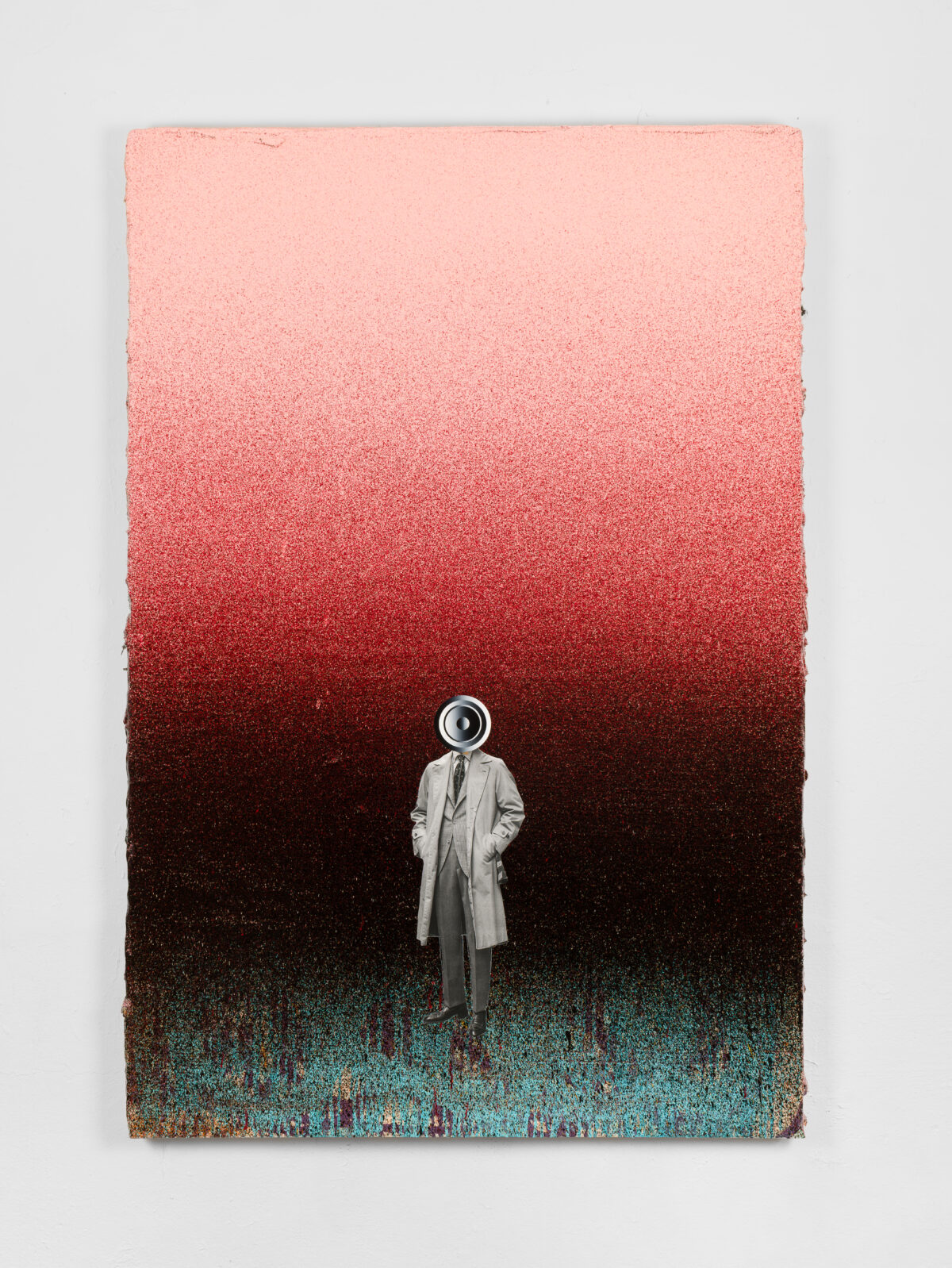
In his most recent paintings, Vladimír Houdek places a solitary figure with an abstracted head against an apparently infinite background: a person in a suit, suspended alone within a vast field of color. His geometric works approach similar questions through seemingly universal systems. Circles multiply, overlap, connect and disconnect from their counterparts, following spatial principles that appear to exceed the rules of Euclidean geometry. His collage and mixed-media works introduce surprisingly tactile and ritualistic elements: masks and fragmented bodies disrupt the geometric rules, only to submit again to an order they might themselves have helped to create.
Alone in Space reflects on the paradox that, while we inhabit a vast space structured by countless relations, forces and principles, some dimensions of our experience remain inherently our own. Being alone here does not necessarily mean being lonely. Rather, it points towards the fundamentally non-transferable nature of individual experience. We may dance together, move around one another and briefly share the same orbit, but what our dancing body actually feels remains ours alone.